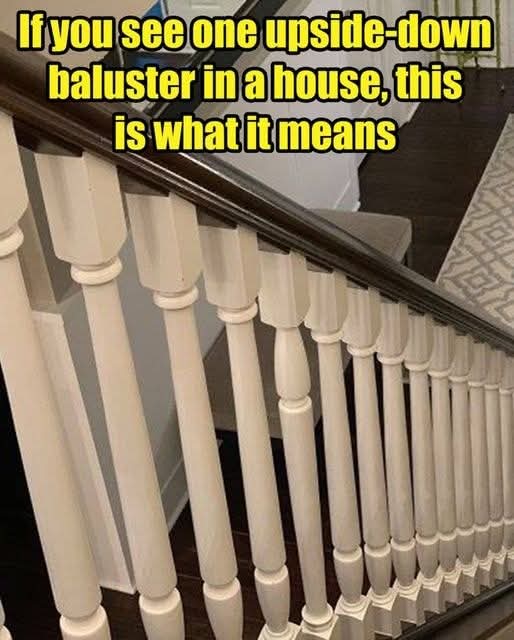
According to the Long Island Press, this superstition dates back centuries, to a time when architecture and spirituality were deeply intertwined. Staircases, acting as links between different levels of a building, were often seen as symbolic bridges between the physical world and the spiritual or ethereal realms. Within this belief system, staircases were thought to serve as potential pathways for spirits – both good and bad – traveling between worlds.
To guard against malevolent spirits, carpenters adopted the practice of installing a single upside-down spindle within an otherwise uniform staircase balustrade. This subtle inversion stems from the belief that evil entities could only move in straight, uninterrupted lines. Disrupting the pattern with an inverted spindle was believed to prevent them from heading upstairs and reaching the living spaces above.
Duality and Balance
Beyond its supernatural significance, the upside-down spindle also symbolizes themes of duality and balance. A staircase inherently represents a journey between two states – up and down, one level to another. Incorporating an element of asymmetry, like the inverted spindle, introduces a deliberate balance to this design. This subtle imperfection mirrors the equilibrium sought in both the physical structure and the spiritual protection it was meant to provide.
Common in Old Houses
The inverted baluster is more common than you might think. In 2020, HGTV and DIY Network host Scott McGillivray sparked intrigue on Facebook when he shared a photo of a staircase railing featuring a single upside-down baluster placed near the center of the banister.Continue reading…
