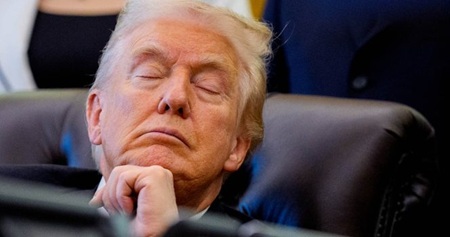
In a clip later shared widely by Forbes, Trump responded calmly, saying that both he and the Crown Prince operate on demanding schedules that leave little room for long rest periods.
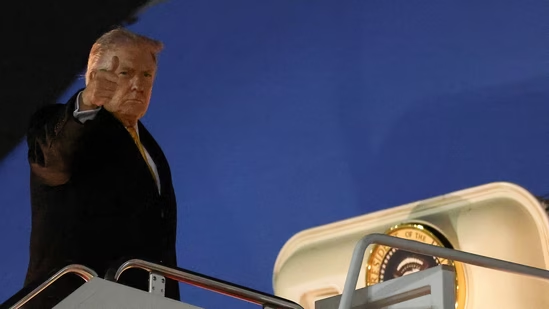
He then added that he and bin Salman frequently communicate at unusual hours, explaining that international leadership often requires flexibility and constant attention to unfolding developments.
Trump emphasized that a strong sense of responsibility shapes his routine. According to him, the passion he feels for his work and for the country encourages him to remain alert and engaged, even late into the night or early in the morning.
“When you love your job, when you love your country, and when you’re in a position like we are,” Trump said, “you’re thinking about your country. He thinks about his. I think about mine. I don’t want to sleep.”
The president also referenced previous comments made about former President Joe Biden, suggesting that adequate rest might affect the job differently for certain leaders. However, he focused primarily on his own schedule, repeating his label: “I’m not a sleeper.”
Public Reaction and Online Analysis
Trump’s remarks reignited the conversation surrounding the viral photographs, but they also broadened the discussion. Supporters argued that the president’s explanation aligned with his reputation for maintaining a fast-paced schedule. Critics, meanwhile, felt the incident highlighted larger concerns about leadership stamina.
However, political analysts were largely in agreement on one point: still images can be misleading. A photo taken at the exact wrong millisecond can portray stillness as sleep, a blink as fatigue, or a moment of reflection as something else entirely.
Experts in digital media pointed out that online platforms often amplify short, context-free visual moments precisely because they are easy to interpret — or misinterpret — in many different ways. A single frame can ignite entire narratives, even if it doesn’t represent the broader reality.
Yet, Trump’s comments about intentionally keeping long hours do offer a deeper perspective into how he views leadership. According to him, staying awake is not a sign of difficulty — it is a deliberate choice tied to dedication.
A Demanding Position, A High-Intensity Schedule
The presidency of the United States involves nonstop briefings, diplomatic communications, national security updates, economic decisions, and a constant influx of new information. It is a position that demands focus, rapid thinking, and the ability to respond at any time.
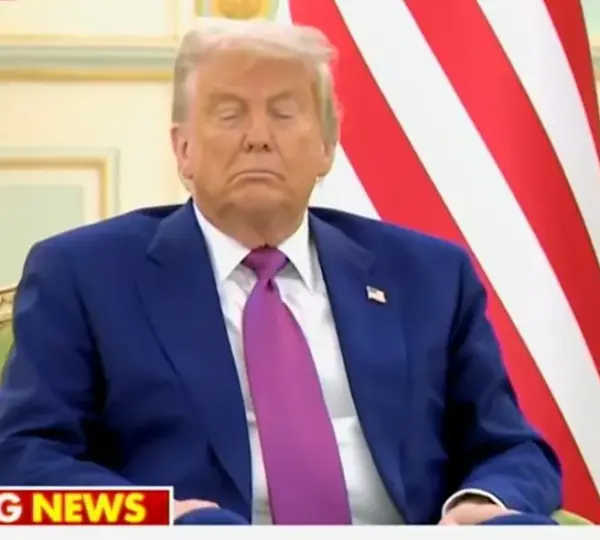
Presidents often operate in different ways: some prioritize structured sleep schedules, while others work deep into the night. Historically, leaders from both parties have admitted that the job reshapes normal sleep patterns. Trump’s claim that he “doesn’t want to sleep” reflects his belief that leadership requires consistent mental presence.
Whether Americans agree or disagree with this approach, it is clear that Trump views his routine as part of his identity as a leader. His remarks offered a window into how he interprets the responsibilities of the office and why he prefers to remain active, even during late-night or early-morning hours.
While the viral photographs triggered waves of commentary and speculation, the broader conversation that followed offered a more nuanced look at the realities of public leadership, the pressures of political visibility, and the way modern media culture magnifies even the smallest of moments. Trump’s response, delivered calmly and confidently, aimed to reshape that narrative by emphasizing his personal work ethic and sense of national duty.
