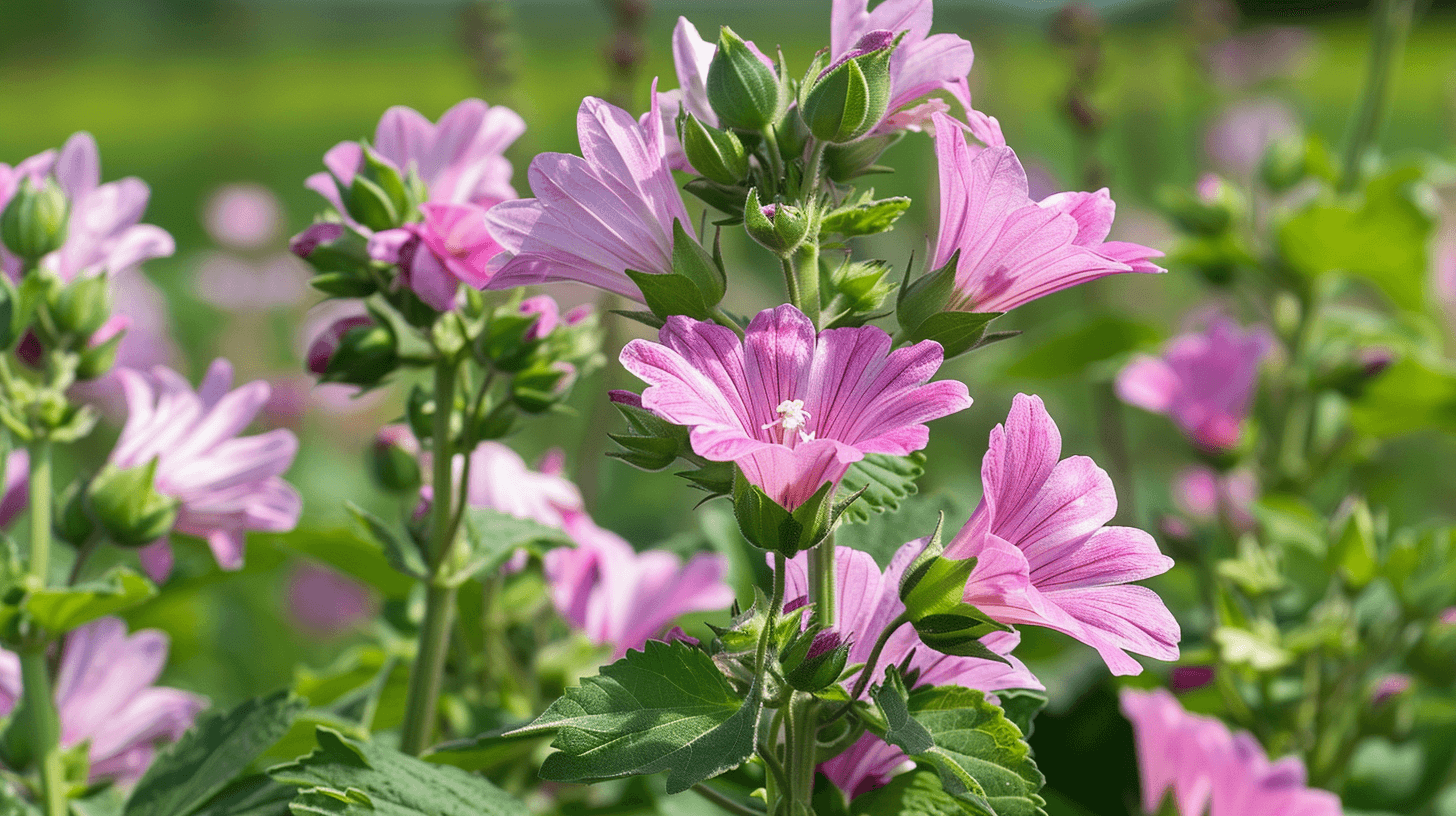
Common mallow is prized for its mucilaginous properties, making it a soothing ally for the digestive system. Its natural compounds form a protective coating along the gastrointestinal tract, offering relief from conditions like gastritis, irritable bowel syndrome (IBS), and heartburn. Drinking a tea made from its leaves and flowers can provide gentle healing and comfort for digestive upsets.
The expectorant properties of Malva neglecta make it an excellent natural remedy for respiratory issues. By loosening mucus and soothing the throat, it can ease symptoms of colds, bronchitis, and sore throats. A warm tea or syrup prepared from the plant helps alleviate discomfort and facilitates easier breathing.
The plant’s anti-inflammatory effects help reduce swelling and pain, making it beneficial for those suffering from arthritis or muscle aches. Whether consumed as a tea or applied topically as a poultice, common mallow can help mitigate both internal and external inflammation.
Rich in vitamins A and C, along with essential minerals like magnesium and iron, Malva neglecta strengthens the immune system. Its antioxidants help protect the body from oxidative stress and bolster defenses against infections, making it an immune-boosting powerhouse.
Traditionally, common mallow has been used to support urinary tract health. Acting as a mild diuretic, it helps flush out toxins and may reduce the risk of urinary tract infections. Its soothing properties also relieve discomfort caused by inflammation within the urinary system.
Topically, common mallow is renowned for its skin-soothing properties. Its high mucilage content hydrates and calms irritated skin, making it useful in treating eczema, dermatitis, and minor wounds.
In addition to its medicinal benefits, common mallow is edible. The leaves, flowers, and stems can be added to salads, soups, or stews, offering a subtle flavor and nutritional boost rich in vitamins and minerals.

Malva Sylvestris (High Mallow)
- Anti-inflammatory Effects
Like its cousin, Malva sylvestris boasts potent anti-inflammatory properties. This makes it useful for easing sore throats, gastrointestinal inflammation, and irritated mucous membranes. A tea or syrup prepared from its leaves and flowers can provide relief from these conditions. - Respiratory Support
High mallow’s ability to loosen phlegm and ease coughs makes it a natural remedy for respiratory ailments. It’s commonly used in teas and syrups to alleviate symptoms of bronchitis, colds, and even asthma. - Wound Healing and Skin CareContinue reading…
